Building strong savings habits is vital to financial health. Whether you are budgeting as a beginner or have successfully managed your finances for years, you will continue to be motivated with specific savings goals. The key is to choose goals that fit your current season of life and yet are just enough of a stretch to challenge you to make progress. Here are over 20 money-saving goals that will help increase your savings and bring you closer to the life you dream of!

No matter which of these saving money goals you choose, remember that the overall idea is to challenge you to change your habits to build healthier financial habits for your future.
Money Saving Goals For Beginners
Whether you are just starting your savings journey or need to restart for whatever reason, these goals were created to be achievable, which helps build your confidence and motivation. These may seem like simplistic goals, but the key is that they focus on building habits.
1 – Save $500 for Emergencies
Having a basic emergency fund is critical, and it should be started before anything else. Focus on building a small, $500 cushion to cover any unexpected expenses that may come up. This can be as simple as car repairs or portions of medical deductibles.
Even if the expense is higher than the $500 you saved up, the idea is that it will be less money you are adding to your debt.

2 – Complete a 30-Day Savings Challenge
Savings challenges are great motivators! This stems from our intrinsic reward system of completing tasks, and fueling our sense of accomplishment.
Whether you start small with $1 saved daily or go all out for more, saving money each day for 30 days can add up fast!
You can get my printable 30-day savings challenge tracker here!
3 – Track Every Penny for a Month
What better way to save money than by understanding your spending habits! Track all your expenses to the penny for 30 days. This helps you identify areas where you can control your spending and save in the process.
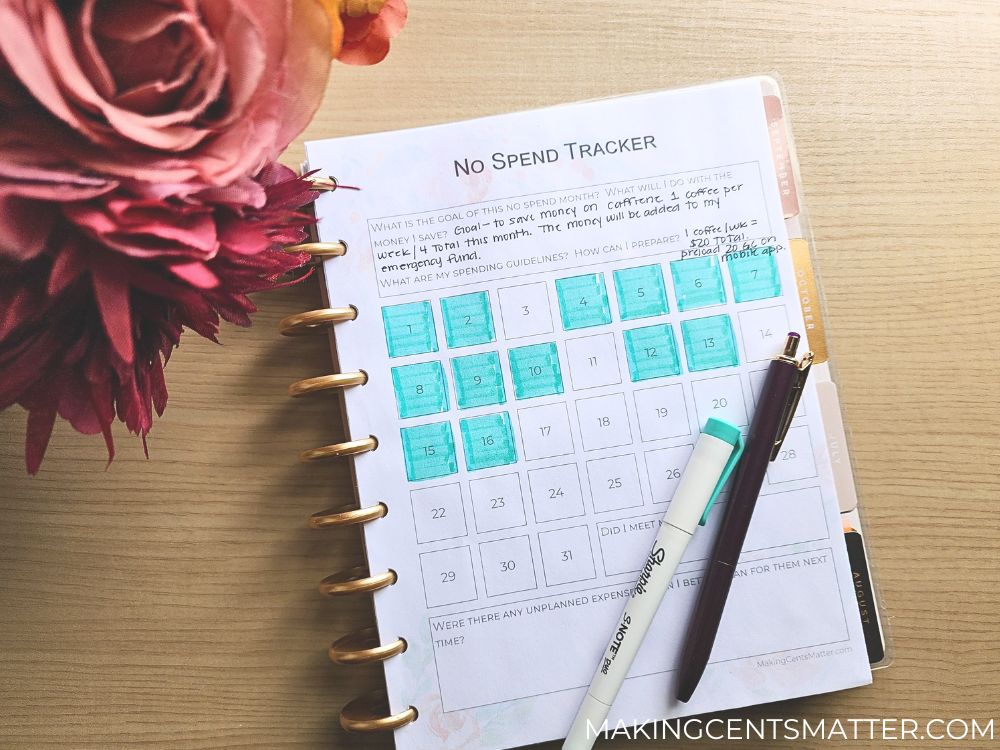
4 – Complete a No-Spend Month
No-spend months are one of the quickest ways to reset your spending habits. Choose a month where you will only spend on essentials, and see how much money you can save!
You can read more tricks on how to conquer a no-spend month here.
5 – Open a Dedicated Savings Account
Keeping a savings account that is separate from your checking account reduces the temptation for you to tap into any extra money. Set up an account, and name it specifically for your new savings goals to help motivate you as you add money to the account.
6 – Save for a Small Treat
As with anything in life, it is all about balance and moderation. Set a short-term savings goal specifically for something fun. This helps to remind you what you’re saving for in the long run, which is your version of financial freedom!
7 – Build a Visual Savings Tracker
Using a savings tracker helps you to visualize your progress, which is extremely motivating. Whether you use a printable chart, a jar, or even a digital tracker, be sure to be proud of every dollar that you save.

Intermediate Level Money Saving Goals
Once you have built some saving habits, it is time to push yourself a little bit farther. These mid-level savings goals will challenge you to prioritize saving money consistently, which helps you to plan further into your future.
1 – Save One Month’s Worth of Expenses
A fully funded emergency fund usually means that 3 to 6 months of expenses can be covered in the event of a job loss, medical emergency, or other unplanned life event. Start small, with just one month of expenses covered. This helps to be a small safety net for life’s unexpected turns.
2 – Create a Holiday Savings Plan
Some things in life are set, and we can plan and save for them ahead of time. The holidays are one of these times.
Avoid the stress and added debt of holiday shopping by setting a goal for expenses specific to the holiday. Make sure your target amount includes gifts, decorations, and any other festivities that occur at the holidays.
I save for these all year in a “Gifting” Sinking Fund. You can head here to read more about sinking funds.

3 – Set Up Automatic Transfers
The simplest way you can save money is to not even think about it! Automate savings transfers to your dedicated savings account on every payday.
4 – Complete a 52-Week Savings Challenge
This classic savings challenge is completely customizable. You can save a designated amount each week, or you can increase how much you save. No matter how you choose to do it, you’re building consistency, which is key to reaching your financial dreams.

5 – Start Saving for a Big Goal
Whether you want to save for a new laptop, furniture set, some new appliances, or even a dream vacation, start saving for it now. Create a savings plan to pay for it in full, rather than adding to your debt that you will pay more on later.
6 – Practice the 24-Hour Rule for Purchases
The best way to reduce any impulsive or non-essential expenses is to delay the purchase by 24 hours or more. What you’ll find is that if the purchase was truly impulsive or non-essential, as time passes, you will no longer want the item.
7 – Save a Windfall
Whenever you receive unexpected money, commit to saving a portion of it. This includes any inheritances, bonuses, tax refunds, or even funds that were gifted to you.
If you really want to jump-start your savings, aim to save 50% of the amount.

Advanced Saving Money Goals
Feeling like you’ve mastered the basics? Congrats! The following money-saving goals are perfect for more experienced budgeters who want to focus more on fine-tuning their savings habits, preparing for the future, or exploring more strategies for building wealth.
1 – Save 3-6 Months of Expenses
If you’ve gotten a month of expenses within your emergency fund, now it’s time to increase it to a fully funded one. Save up 3 to 6 months of expenses to give yourself the peace of mind knowing you can handle whatever life throws your way.
2 – Maximize Retirement Contributions
Have you started saving money for your retirement? Many people view having a significant amount in their retirement as the most important long-term financial goal they can achieve.
If that’s you, challenge yourself to max out your 401(k) plan, or begin contributing to the maximum allowable amount within an IRA.
3 – Open a High-Yield Savings Account
When you can make your money work for you, the stress you feel while building savings and wealth will reduce.
Move your money to a high-yield savings account to take advantage of the higher interest rates and compounding. This leads to faster growth with little effort on your part.
4 – Save for Future Dreams
What do you see in your future? A down payment on the house of your dreams? Starting your own business? Or maybe it’s funding your children’s or grandchildren’s education.
No matter what your future goal is, break it down into smaller and more achievable goals to help you start today.

5 – Complete a No Spend Quarter
Mastered a no-spend month and want more of a challenge? Try a no-spend quarter! Three months of intensely focused spending can help to create incredible shifts within your financial habits.
Bonus if you want to complete a no-spend year as well.
6 – Set a Yearly Savings Percentage Goal
Now that you are one of the most advanced savers, aim to save a percentage of your income. It can be 25%, 50% — the amount does not matter. But by setting an enthusiastic percentage to save, you can quickly increase the amount within your savings account.
With these Money Savings Goals, You Are ready to Build Your Best Saving Plan Yet!
It doesn’t matter if you are a beginner or have been saving money for years; saving money is a skill that grows stronger as you practice. Choosing the right money-saving goals for your current season of life will help keep you motivated, without losing momentum on your dreams.
Remember, it is not about perfection — it is about progress. Make every cent matter to your overall financial health!


Leave a Reply