Does this sound familiar? You’re doing everything that you can to stretch your paycheck, from juggling bills, groceries, and life. Yet the idea of finding extra money seems laughable right now. But the good news is that you don’t need a windfall of hundreds of dollars to get started on your debt snowball. All you need are small, consistent, and manageable amounts. Here are 10 steps to help you find extra money in your budget for your debt snowball. By following these steps, even if your budget feels tight, you can make a larger difference in reducing your debt.

One of the easiest ways to increase your debt payment is to increase your income. The fastest way to do that is to decrease your expenses. If you follow the 10 steps below, you’ll be able to find extra money within your budget that you can add to your debt snowball.
1: Start By Tracking Every Dollar
Before you can start finding extra money to add to your debt snowball, you need to understand where your money is currently going. This means tracking all of your expenses.
Write down everything that you spend money on over the next week or two. This list doesn’t have to be perfect. This list is not about shaming yourself or blaming yourself and others. Creating a list of your expenses is all about awareness. I have been surprised at how much can be spent without really noticing.
This simple step is the start to finding where you can adjust your spending patterns.
2: Cut The “Tiny Leaks” Within Your Budget
Now that you know where your money is going, start to look for small things that add up fast.
Some examples include:
- Forgotten subscription services
- Daily coffee shop runs, or stops at the local convenience mart
- Extra trips to the store for one or two items (and you leave with more than that)
- Online purchases you forgot to reconcile in your budget
The goal here isn’t to cut a massive amount from your budget. Simply finding $5 or $10 that can be cut from your spending and sent to your debt payments can help significantly when it comes to paying off your debt.
Want to learn how to increase your debt payment without breaking the bank? Check Out [6 Painless Ways To Increase Your Debt Payment].
3: Create A Meal Plan & Shop With A List
Food spending is one of the easiest places to overspend without even realizing it. And from my experience, it is also one of the easiest expenses to justify overspending in.
Start by planning your meals ahead of time. These don’t have to be concrete meals, but simply having an idea of what you will make, creating a list, and sticking to the list can end up saving you a lot of money each week.
Want to make it even simpler? Pick 5 to 10 favorite meals, and rotate them along with leftovers every two weeks. This way, you have some variety each week, less food wasted by eating leftovers, and you reduce the amount of money spent on last-minute drive-thru runs or grocery store stops.

4: Declutter & Sell What You Don’t Use
Take a weekend to walk through your home and find 5 or 10 things that you no longer use. You can either post them on local buy/sell groups or add them to Facebook Marketplace.
These don’t have to be fancy items. Kids’ clothes, extra kitchen gadgets, books, tools, and electronics all sell quickly. During my divorce, we even sold the pump and ladder to the pool, a pellet stove that was no longer needed.
Even $20 gained from items you no longer use is $20 closer that you are to debt freedom.
5: Use Unexpected Money Wisely
Whether it is a bonus from work, a tax refund, or birthday money from a relative, put a portion of it, or all of it, towards paying off your debt.
It doesn’t have to be a massive amount of money each time to make a huge difference. Any additional money you can add to your debt snowball brings you a step closer to being debt-free.
6: Round Up & Use The Difference
Set up your bank account or a budgeting app to round up your purchases and set aside the extra cash. So if you made a $4.25 purchase, set the $0.75 aside in a “debt payment” savings account, and add it to your monthly debt payment. Even tiny amounts that are saved up over time can help you build momentum quickly, while feeling painless to your budget.
This has been one of my favorite ways to have more money to add towards a debt snowball! I always budget bills to be the highest they’ve been; this is especially true for my electric bill. The highest the bill has been was $150, and in the summers it is in the $80s. Rather than using that extra $70 for something else, I added that extra money to the debt payment for the month.
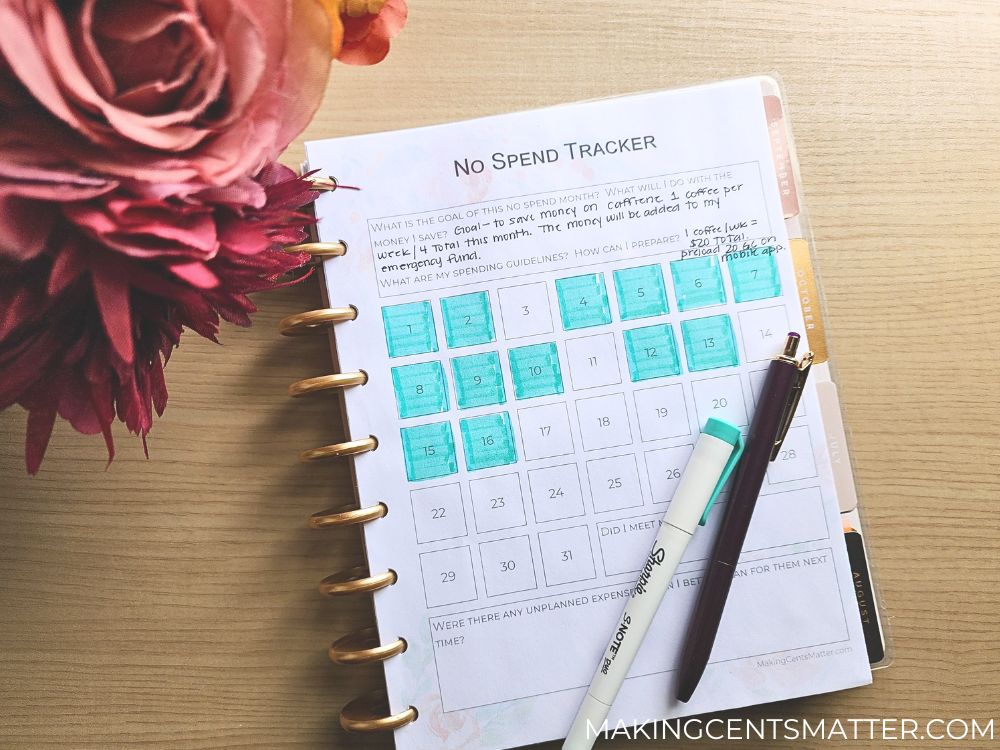
7: Pick One “No-Spend” Day A Week
Many people complete no-spend months to help them save money. If completing an entire month seems intimidating, start with a “no-spend” day where you intentionally spend nothing that day. That means you are planning for a day where all your meals are planned out, you don’t browse online, and you don’t drive anywhere extra.
When that day comes, if it isn’t going to plan, stick to the no-spend aspect of it. You’ll feel much more accomplished that you stuck to your no-spend plan, even when life didn’t go along with your plan. Look back at the list of expenses you listed at the beginning. Could a no-spend day easily save you $20? What about $40? Over the course of a month, that’s upwards of $160 (or more) that you can add to your debt payment.
Want more information on successful no-spend months? Check Out [15 Tips To Set Up A No-Spend Month For Success].
8: Rework Your Monthly Bills
This is where you will need to take a fine-tooth comb to your monthly bills, and ask yourself:
- Is there a cheaper alternative I can use?
- Can I pause this service?
- Is there a discount I’m eligible for with my current provider?
Whether it is your internet provider, your cell phone plan, or even streaming services, you can create some wiggle room within your budget simply by calling or changing providers.
9: Start Something Small To Earn More Income
This doesn’t have to be a full-blown side business, but I am sure there are some things that you can do occasionally that will help you make some money to add to your debt snowball.
Some ideas include: babysitting, tutoring, delivering groceries, or selling items online.
The trick here is to keep it simple and keep it doable. This doesn’t have to be forever.
10: Track Your Progress For Motivation
Seeing your progress over time, no matter how slow, is important to stay motivated. This is especially important when you are paying off larger debts.
Find a debt snowball tracker, or draw one on a piece of paper, and color it in as you go. Another option is to add up all the extra money you have found and added to your debt.
No matter which method you use, it is important to track your progress for those times when you feel discouraged. Looking at your tracker can help remind you of the progress you have made so far.
Final Thoughts: Consistent Small Changes Are The Best Way To Make Progress
You don’t need a big income to get out of debt. All you need is a plan, determination, as well as small, consistent steps.
Every dollar that you add towards your debt snowball is more money saved later. Don’t underestimate yourself and what you can do with a little extra effort.
You’re not behind, you’re simply starting! And that is very powerful.
Want More Content Like This? Check Out:
- How To Choose A Budgeting Method That Works For You
- 15 Budgeting Goals That Are Perfect For Any Stage
- How To Use A Bill-Pay Checklist to Effectively Track Your Bills
- Your Budget Is Your Key To Financial Freedom


Leave a Reply