Learning how to use the debt snowball method to pay off debt is a simple process. It is also a popular strategy that helps reduce the feeling of being overwhelmed when paying off all of your debt by focusing on one debt balance at a time. Read more about how to use the debt snowball method to help you become debt-free.
Related Posts:
- Simple Ways To Increase Your Debt Payment (Without Breaking The Bank)
- How To Calculate Your Debt-to-Income Ratio
- Have A Budget That Failed? Here Are Some Lessons We Can Learn From Failed Budgets!
What is the Debt Snowball Method?
The debt snowball method is a popular debt repayment strategy. It focuses on paying off your debts in order of smallest to largest balance while ignoring the interest rates. Shifting the focus from attempting to reduce all your debt balances simultaneously to focusing on the smallest balance, it is the most effective payoff option if you feel overwhelmed by your debt and would like a simplified and structured approach.
This payoff method also helps if you need the continual motivation of small, easy wins while paying off your debt. It gives a sense of achievement, which helps encourage you to continue, even as you are tackling your largest debts.
Who should use this method?
The debt snowball payoff method is effective for many people. Here are some of the people this works well for:
Someone who needs a quick win to keep up motivation.
If you are someone who loves to see that paying off smaller debts quickly gives a sense of accomplishment, this method is for you. This also applies if you find enjoyment in crossing items off a list.
Someone who has multiple small debts.
If you have multiple debt accounts that have small balances, this method gives you the structure needed to focus on one account at a time. By quickly paying off the smaller debts, you can manage your monthly budget more easily by clearing out unnecessary monthly debt payments.
Someone new to debt-repayment strategies.
If you are overwhelmed by all the different strategies on how to pay off your debt, the snowball method can be one of the simplest and easiest for you to understand as you get started. That doesn’t mean that you can’t change strategies as you become familiar with your finances. Remember that no matter which strategy you end up choosing in the end, the overall goal is financial independence and financial success.
Someone who struggles with budgeting and discipline.
If you struggle with budgeting or sticking to a financial goal, the snowball method can help you. By building discipline within your budget gradually and making regular payments, you are also rewarded as each debt is cleared.
Someone who has a stable and consistent income.
If you already have a steady income, this method easily allows for consistent payments through its naturally structured approach. By paying a predictable amount toward your debt, you can easily build momentum with each balance that is paid off.
Someone who is not concerned with saving on interest payments.
If your interest rates are low, the cost of the interest accrued won’t be that significant. However, if your interest rates are higher, the positive cognitive benefits of paying off accounts can outweigh any potential interest savings from another repayment strategy.
Someone who has tried other debt strategies and had no success.
If you have tried other strategies but it didn’t work for you at that time, give this repayment strategy a try as you get back into your debt-free journey. The simplicity and repetitive milestones of the debt snowball method can help encourage you through any of the past challenges you had with the other strategies. As you become more confident, you can give those other strategies a try.

What Are The Pros And Cons Of Paying Off Debt with The Snowball Method?
While the debt snowball method can be a powerful tool to help pay off your debt, this method is not for everyone. Here are some pros and cons of this method you should consider before deciding if it is right for you.
Pros:
- Motivation – When you can pay off smaller debts, your confidence is boosted, keeping you motivated. Each debt that you pay off reinforces that positive momentum and encourages you to stick to your debt-free goal.
- Simple Approach – The debt snowball method is quite easy to follow and doesn’t require you to make any calculations around interest rate savings.
- Financial Discipline – With the focus on paying off one debt at a time, you are less likely to feel overwhelmed in your debt-free journey. This also helps you build good financial habits while paying down your debt methodically.
- Increased Accountability – The debt snowball payoff method creates a clear path toward debt freedom with smaller goals that are much easier to track. By paying off your debts one at a time, it becomes simpler for you to assess your progress and stay accountable in the process.
- Financial Behavioral Change – Sticking to any sort of financial plan requires behavioral changes, and this can be challenging. The regular progress of the debt snowball payoff method uses positive changes to help motivate you to build financial discipline and refine your budgeting habits. This ultimately leads to better money management and overall healthy financial habits.
Cons:
- Increased Interest Costs – Remember that this debt payoff method prioritizes your debt balances and not your interest rates. If you have large, high-interest debts, this method can lead to extra costs in interest payments. In this case, the debt avalanche method may be what you need, as it prioritizes your debt payoff plan by interest rates rather than balances.
- Slower Payoff Timeline – If your high-interest debt happens to have a large balance, the debt snowball method can lead to a slower overall payoff timeline.
- Not Ideal For Disciplined Borrowers – If you are already disciplined about managing your finances, meaning you don’t need the motivational boost from quick payoff wins, the debt avalanche payoff method would be more efficient for you since it saves time and money.
- Discouragement With Larger Debts – After you have paid off all your smaller balances and are left with the larger balances, it can feel very discouraging as you continue your debt-free journey without the continual quick wins. To help battle this, make smaller, more achievable goals within your payoff strategy. For example, you can make it a goal to pay off $5,000 of your current debt every 6 months.
- Less Flexibility in Certain Circumstances – If you have a sudden change in your financial situation, like a loss of income or an emergency, this particular strategy may be harder to adjust than a strategy that is focused only on high-interest debt.
How Can I Start Using The Debt Snowball Method?
Beginning to use the debt snowball method as your payoff strategy can be done in 5 simple steps:
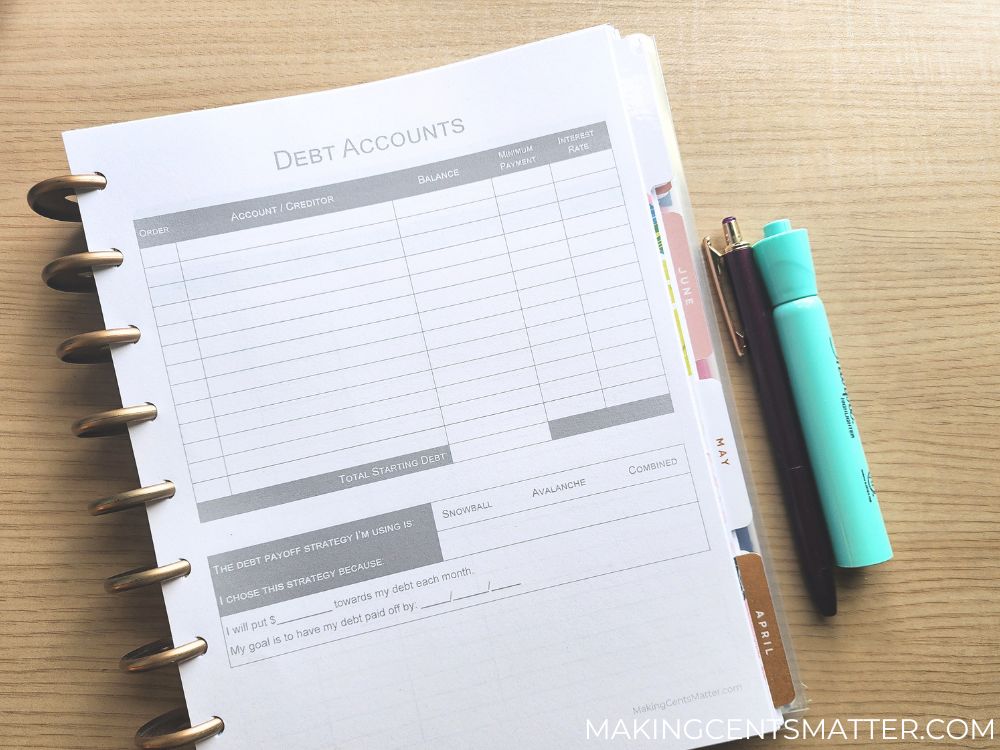
1 – List Out All Your Debts By Their Balances
The first step is to get the information for all of your debt accounts. This includes credit cards, personal loans, car loans, medical bills, and any other debt you owe.
List them out, including the balances, and then number them from smallest to largest balance. You can include the interest rate if you like, but don’t focus on the interest rate since the intention with the debt snowball method is the amount of each debt.
2 – Make Minimum Payments On All The Debts Except The Smallest Balance
Continue to make on-time, minimum payments to each debt account to keep them in good standing. This helps you avoid late fees and penalties that can increase your balances. Also, if you can avoid it, do not add to their debt balances for unexpected expenses, and use your emergency fund instead.
3 – Put Any Extra Money That You Can Towards The Smallest Debt
Any extra money that you can afford throughout your pay period should be put toward paying off your smallest debt. This can be from cutting back on your expenses, using extra money from a raise, reducing the amount you spend eating out, cutting out subscriptions, and so on. You can learn more about some painless ways to increase your debt payment here.
4 – When The Smallest Debt Is Paid Off, Move To The Next Smallest Debt
Once your smallest debt is fully paid off, take the amount you were paying on it, the minimum payment plus any extra money you were able to pay, and put it toward the second smallest debt. This larger payment creates a “snowball” effect, which allows you to pay a larger amount on each debt. It also allows you to pay each debt off faster than if you were simply making the minimum payments toward all of your debts.
5 – Repeat This Process Until All Debt Accounts Are Paid Off
Continue this process each time you pay off a debt balance. Each time you pay off a balance, you free up more money to add to the next debt. Eventually, you will reach your largest debt balance with the combination of all your minimum payments and any extra contributions. This significantly reduces the time it would take to pay off even the largest balances.
An Example of The Debt Snowball Method
Following the steps listed above, list out all debts from smallest to largest. This list helps clarify your current debt payments and makes it easier for you to manage your financial obligations.
- Credit Card A: $500 balance; $50 minimum payment
- Medical Bill: $1,200 balance; $75 minimum payment
- Car Loan: $3,500 balance; $100 minimum payment
- Student Loan: $10,000 balance; $225 minimum payment
Using the example debts from above, let’s say you can find $100 each month that you can add to this debt. This extra money can come from cancelling subscriptions, eating out once every two weeks, and temporarily reducing miscellaneous expenses.
This means you are paying $150 each month towards Credit Card A, and it is paid off in about 4 months.
Once Credit Card A is paid off, you can add the $150 monthly payment you were making to the $75 minimum monthly payment on the medical bill. The following image shows how the snowball method helps to increase the amount of your payments and accelerate your debt-free journey the process.

Final Thoughts:
Improving your financial health is not a one-size-fits-all strategy, and neither is your debt-free journey. It’s your journey, and there are multiple strategies you can use along the way. Using the debt snowball strategy is just one method that you can use to help improve your overall financial health.


Leave a Reply