Ever felt overwhelmed by numbers every time you intend to get your finances under control? You’re not alone. Budgeting, especially in the beginning, can feel like a massive task. Creating budget categories is one simple strategy that can make all the difference. When you understand where you are spending money, you can be more intentional with your financial health, focused on reaching your goals, and motivated to achieve lasting financial stability. Whether you are just starting your budget journey or are looking for tips to improve your current system, this guide to budget categories will help you succeed.
Related Posts:
- 20 Genius Money Saving Goals
- Complete Guide To Using A Cash Budget
- How To Use A Budget Calendar To Organize Your Finances
What Are Budget Categories?
Budget categories, or expense categories, are different ways that you group your income and spending. Each category represents a specific type of expense or financial obligation. Rather than viewing your money as one lump sum, budget categories help you to assign every dollar you earn a job, which allows you to stay focused on your financial goals.
Budget categories are unique to your situation. Some common categories you may not need; you may also choose to incorporate categories that are unique to your financial management. The key is that you understand where your money is going by utilizing budget categories. This ensures that all your financial obligations are taken care of.

Why You Need Categories In Your Budget?
Have you ever tried to plan a trip without creating an itinerary? You don’t, because you would end up stressed, and end up spending more than you intended to.
The same applies to your finances. When you don’t have budget categories for organizing your money, it is hard to know what is essential, what expenses can be cut or reduced, and how much money you have left for things you find fulfilling.
Categories Help to Give Your Budget Structure
When you are beginning to budget, establishing clear categories for your spending helps transform your budget by giving it structure. Budgeting categories can also help you:
- Set limits for each expense, avoiding overspending
- Accurately track your spending habits
- Easily identify areas where you can reduce spending
- Align your finances with your values and goals
- Make informed decisions about unexpected costs

Benefits Of Using Budget Categories
While organizing your finances is already a benefit, creating budget categories has benefits of its own. When you create effective categories for your budget, you improve your overall financial health by:
1 – Refining Your Budget Tracking:
When every financial transaction fits within a category, you can easily spot trends, identify challenges, and have benchmarks to evaluate your progress over time. Budget categories help to create straightforward expense tracking, which encourages you to make smarter financial habits.
2 – Creating Customized Financial Goals & Priorities:
Knowing where your money is going helps you set and monitor financial goals that are in line with your values and priorities, rather than with what is trending on social media. Whether it is paying off debt, creating an emergency fund, or saving for a down payment, when you have budget categories around your financial goals helps motivate you to spend mindfully.
3 – Communicating Shared Budgets Clearly:
When you are sharing finances with a partner or as a family, creating budget categories helps to provide a common language. By getting everyone on the same page for financial planning, misunderstandings are reduced.
4 – Making Well-Informed Financial Decisions:
By creating clearly defined budget categories, you always know where your money is going. If an unexpected expense comes up, you will be able to adjust your budget confidently because you will know what you can realistically afford.
5 – Improving Financial Health:
Organizing your finances into clear categories helps to prevent late payments, missed bills, and any miscellaneous spending. As you gain more confidence and control over your finances, your stress reduces, and peace of mind increases.

Four Types of Budgeting Categories:
Not all categories within your budget are going to be created equal. Understanding the difference as you track your expenses allows you to confidently prioritize and create budget categories to manage your money more effectively.
Necessary vs Discretionary Expenses:
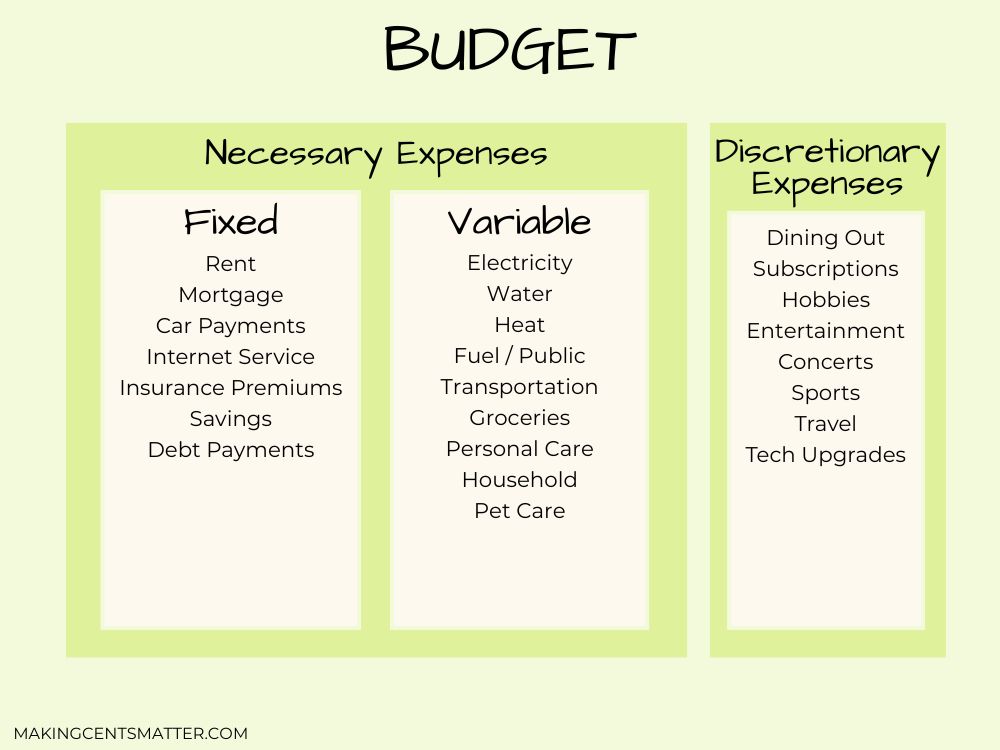
Necessary expenses are essential for your daily living and well-being, while discretionary expenses are things you choose to spend your money on for convenience or enjoyment.
Discretionary expenses offer the most flexibility within your budget. Times when money is tight, or when you are adjusting your spending to meet a specific goal, discretionary expenses are going to be the first to be cut
Necessary expenses prioritize costs that are essential for survival and are often divided into fixed and variable expenses.
Fixed vs Variable Expenses
Fixed expenses are costs that remain the same month to month. They are predictable, which makes them the easiest to budget for. Variable expenses, on the other hand, can change from month to month based on usage or behavior. While they may be less predictable, they are still necessary expenses.
How To Identify Categories Within My Budget
Identifying categories that will work within your budget doesn’t require a lot of research or any fancy tools. I actually find most tools to be restrictive for my budget. What will help you identify effective budget categories is an awareness and honest reflection of your spending, as well as consistency in tracking.
1 – Track Your Expenses
Before you can start to assign categories within your budget, you need to know what you are spending your money on.
Look at the last 30-90 days of spending and track every dollar. You may need to find bank statements, credit card statements, bills, and receipts.
2 – Group Similar Expenses
Start grouping your spending into categories that make sense to you. For example, combine all your grocery spending into a “groceries” or “food” category, gas for your car as “fuel”, and so on.
3 – Distinguish Wants vs. Needs
As you group your spending into categories, think about whether the expense is necessary or discretionary. This will help you prioritize your spending and make sure that essential expenses are always covered.
4 – Set (Reasonable) Category Limits
Using your income and spending patterns as a guideline, decide how much you can allocate to each budget category. Be realistic. If you are constantly overspending in one area, you may need to adjust your budget and temporarily cut back in other areas.
5 – Align With Your Financial Goals
Be sure that you have categories within your budget that reflect your values and long-term financial goals. If you want to create an emergency fund, make sure you have an “Emergency Fund” category. Want to save up for a vacation? Include a “Week At The Beach” category.
When your budget supports your overall goals, you have more motivation to stick with it.
6 – Review And Revise
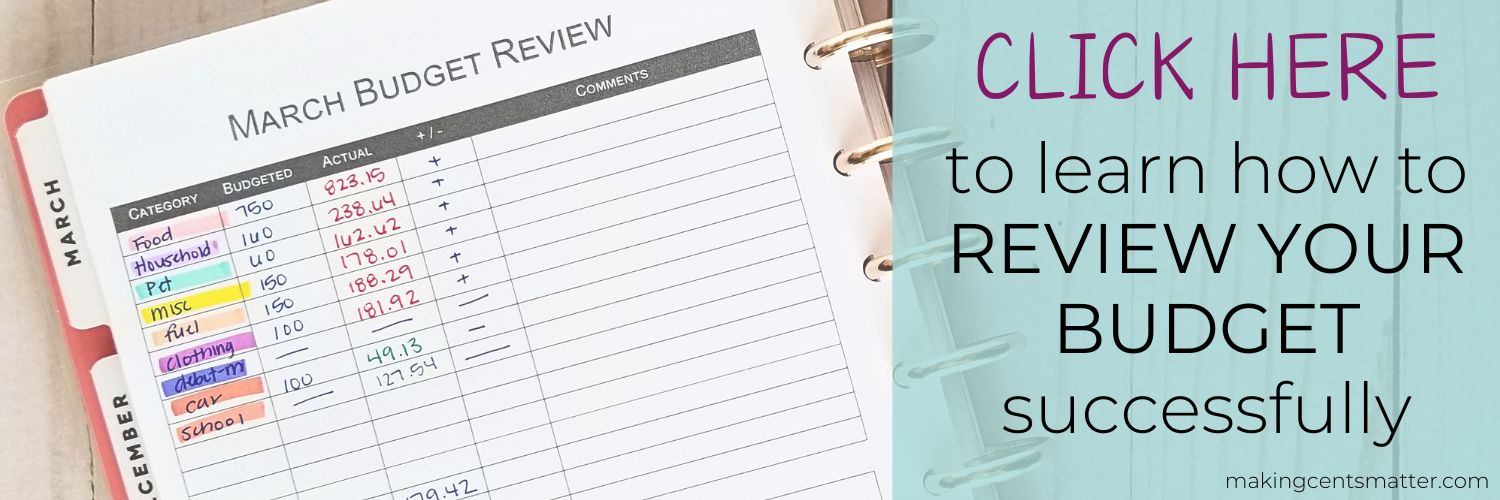
Your finances will change over time, and your budget categories should reflect that change. Review your budget monthly to ensure that your budget categories still fit your lifestyle and goals. Don’t be afraid to adjust as you need to.
Start Purposefully Organizing Your Finances
Using categories within your budget creates the foundation for effective budgeting. Categories can help turn your budget from an overwhelming jumble into an organized system that allows you to confidently take control.
If you are a budgeting beginner, creating and using categories within your budget will be a total game-changer. It will help you focus on your day-to-day expense tracking, as well as your long-term financial goals.
Don’t worry about being perfect; budgeting is a habit that will get easier with time and consistency. Be sure to include categories within your budget to create a system that works for your lifestyle, will help you stay on track, and strengthen your overall financial health.

Leave a Reply