
Starting new financial habits, like saving money, can feel daunting. This is especially true if you’re at the beginning of your budgeting journey and already feel overwhelmed. This is where savings challenges, like the 100-envelope savings challenge, can help. Savings challenges are ideal for beginners since they break down saving money into smaller, more manageable steps, which then help you feel like you’ve achieved something big. The best part is, the 100-envelope challenge, like most savings challenges, doesn’t require any complex budgeting system or any knowledge of advanced money management skills.

Related Posts
- 30 Beginner-Friendly Savings Challenges
- 10 Budgeting Habits That Are Perfect For Beginners
- Your Complete Guide To Savings Challenges
What Is A Savings Challenge?
Savings challenges are simple, structured methods that help support how you manage your finances by creating an intentional approach to saving money. Completing challenges encourages you from traditional forms of savings to treating saving money like it’s a game, with specific rules and goals, rather than random amounts or unrealistic goals.
Whether you complete one savings challenge or many, the ultimate goal is to improve your overall financial health and establish healthy financial habits. This goal is the same whether you pick a short no-spend challenge or something longer like a 52-week savings challenge; their purpose is to motivate you to decrease your spending and increase your savings through consistency and discipline.

Why Completing Savings Challenges Is Helpful
Savings challenges are one of the few budgeting and savings techniques that can benefit anyone, no matter where they are in their financial stage of life. Whether you want to save up for a big vacation, a large purchase, or try to build up an emergency fund, completing a savings challenge will help transform saving money from a chore to a goal-oriented journey.
The biggest reason that savings challenges are so helpful is that they help you to set a specific financial goal and commit to it. In turn, you become more aware of your spending habits, pay attention to your budget, and help to increase your motivation to continue to save.

What Is The 100-Envelope Savings Challenge
The 100-envelope challenge is a perfect savings challenge for budgeting beginners since it’s designed to help you save money in increments. This particular method envelopes numbered 1 through 100. Each day, or week, you draw one envelope and place the corresponding amount of cash inside that envelope, or transfer the corresponding amount to a separate savings account. So if you pull the envelope labeled 38, you would put $38 into that envelope, or savings account.
If you follow the challenge with your envelopes set up from $1 through $100, you will have $5,050 saved by the time you’ve completed, which can be a significant contribution to an emergency fund, home project, or even savings for a vacation or the holidays.
Pros of Completing The Challenge
- Customizable & Flexible: Completing this challenge daily or weekly helps you build savings as a habit, but also allows you to adjust your envelopes based on your income.
- Visual & Motivating: Seeing progress as your envelopes, or even your bank account, fill up helps to reinforce healthy financial habits.
- Builds Consistency: Saving frequently, even in smaller amounts, helps to build discipline and support your long-term financial management.
- Beginner Friendly: This particular savings challenge has a simple setup, making it ideal for beginners.
Cons To The Challenge
- Works Best With Cash: While this method works best with a cash budget, it may be an inconvenient savings challenge if you prefer digital banking.
- Requires Some Planning: Keeping track of envelopes or amounts that you have already set aside will require some additional planning, storage, and accountability.
- Dollar Amounts May Need Modification: Drawing a high-numbered envelope early on could cause strain on a tight budget. There may also be some who think the $5,050 amount saved is too little, or too much.
How To Keep Track Of Your Progress During The 100-Envelope Challenge
Tracking your progress throughout any savings challenge is essential for organization as well as motivation. Here are a few ways that you can keep track of your progress.
No matter which method you end up choosing, make sure it is visible and in a convenient location to help reinforce your savings goal, as well as keep the motivation to save going.
Envelope Checklist
Create a simple checklist numbered 1 through 100, and mark off each number as you fill the corresponding envelope.
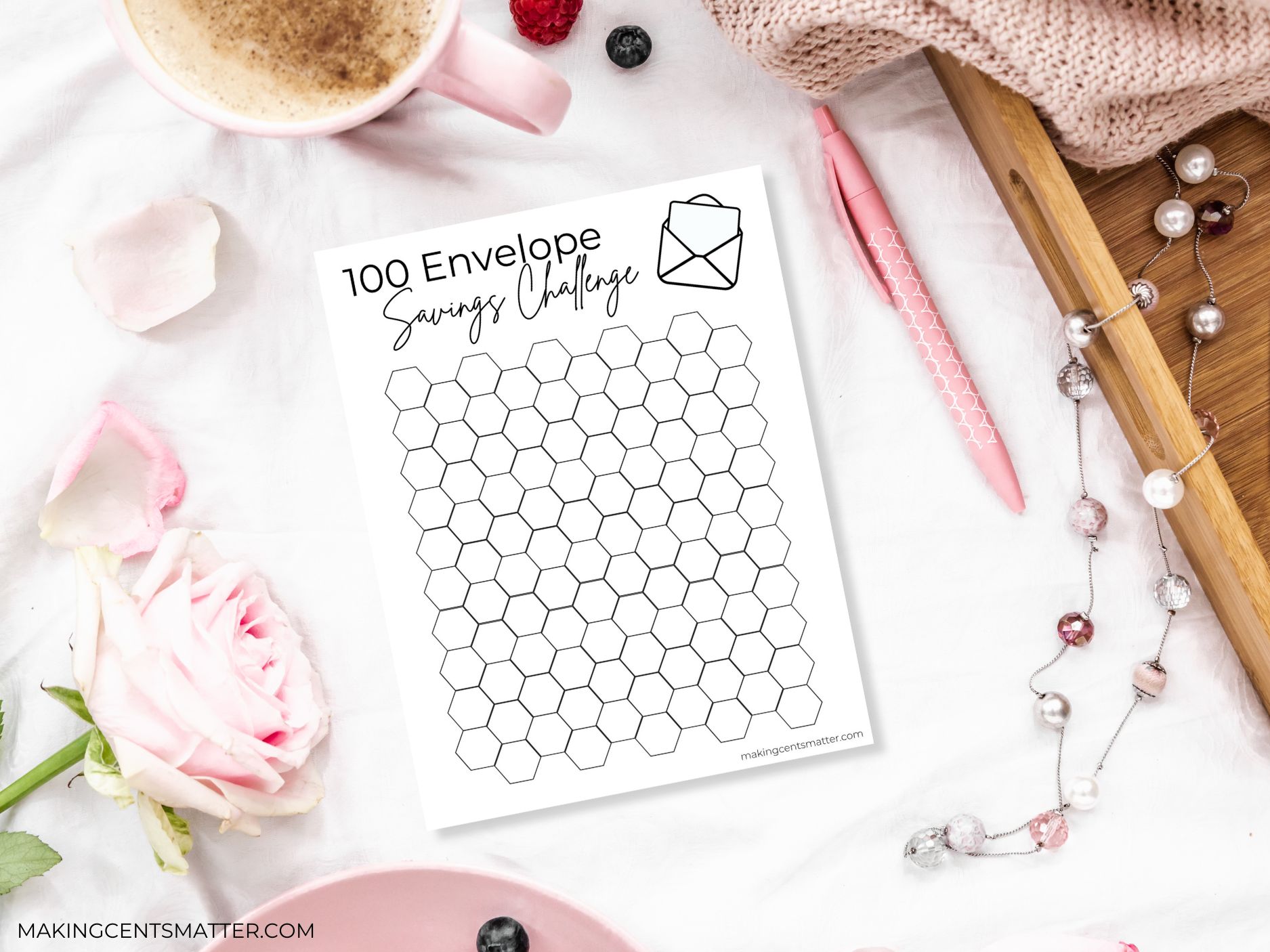
Savings Tracker Printable
Whether you decide to use a coloring chart or my free printable, each envelope is represented by a shape that gets filled in.
Using A Cash Binder System
Store your cash in binder pockets with labels instead of physical envelopes, like shown here*.
Digitally Tracking With Spreadsheets Or Apps
If you prefer to keep your funds in a bank account, you can track the envelope numbers digitally as well as when you transfer each amount to a designated savings account.
Steps To Complete The 100-Envelope Savings Challenge
The steps to complete the 100-envelope challenge may be simple, but they require you to be consistent and committed. As you continue, you’ll build your confidence and momentum, which will help with all your personal finance goals beyond this savings challenge.
- Gather 100 envelopes*, or digital placeholders, and label them 1 – 100
- Decide how often you will fill your envelopes. This can be daily, weekly, or at your own pace.
- Draw one envelope, and place a cash amount in it that is equal to the number written on it
- Be sure to store your envelopes in a secure location, like a cash box*, binder, or safe*.
- Mark your progress on your tracker, checklist, or spreadsheet.
- Stay consistent! You can always swap for a different envelope value, or slow the pace, but do not quit!
- When all your envelopes are finally filled, deposit your savings and apply the funds to your financial goals.
Want to access my library of free budgeting printables? Click here to sign up!

Tips To Complete The 100-Envelope Savings Challenge Successfully
With any savings challenge that you complete, there are skills that are being reinforced beyond just the single experience. Tactics such as planning, tracking your progress over time, and being intentional are all skills that will help to not only transform how you view your finances while improving your financial health, but also help you feel confident in managing your money.
- Start Small on Busy And / Or Tight Weeks. By saving less at first, or during times when your budget is a bit more strict, you are still building momentum without becoming overwhelmed.
- Plan Ahead For Your Larger Envelopes. You know that eventually, there will be larger amounts to be saved. Take the time to adjust your spending in order to accommodate, or choose those envelopes during higher-income periods.
- Utilize Cash-Back Or Extra Income. By supplementing your savings challenge with any bonus income, you can reduce the strain on your regular budget.
- Pair The Challenge With Other Tips. These can include budget reviews, meal planning, or cutting out impulse buying with a no-spend challenge to help create more wiggle room in your budget for saving.
- Create Accountability. Get a friend or partner to share the challenge with you, helping to keep the motivation high.
- Keep The Challenge Visible. Whether your goal is to jump-start your emergency fund or save up for a vacation, writing the purpose for your savings helps to make the commitment much easier.
- Celebrate Your Milestones. Reward yourself, within a budget, when you reach certain total amounts saved.

Want More Content Like This? Check Out:
- How To Conquer A No-Spend Challenge
- 8 Reasons Why Financial Goals Are Important
- 15 Tips For Using A Budget Calendar Effectively
Your Financial Growth Is Supported With Every Step
When looking at the bigger picture, the 100-envelope savings challenge does more than help you save money; it strengthens your mindset, increases your awareness surrounding finances, helps reinforce budgeting basics, and develops discipline. Each of these skills supports your long-term financial goals, whether it is building your emergency fund or paying off debt.
Ready to take your first steps? Set your challenge start date, get your envelopes, and begin building a savings routine that helps to support the life that you want!


Leave a Reply