When you’re working on improving your overall financial health, one of the most important steps you can take is to develop good financial habits. Many people underestimate the long-term impact that their daily money decisions can have. These smaller, daily decisions, like how you are spending or saving money, are the small repeated actions that have the biggest impact to move you closer to, or further from, your biggest financial goals. Here are 5 financial habits that you need to start immediately.

Looking For Something Else?
- 20 Genius Money Saving Goals
- 10 Mistakes To Avoid On Your Debt-Free Journey
- How To Organize Your Finances With A Budget Binder

What Are Financial Habits?
According to James Clear*, habits, when broken down, are any action, routine, or behavior that helps to create continual growth towards bigger changes. These aren’t massive overhauls, but are smaller and consistent improvements that work towards a larger system.
Financial habits are simply any repeated actions, routines, and behaviors that help shape how you manage your money, including how you earn, spend, save, and invest. Over time, these small actions help to build consistency that has a major impact on your overall personal finance management.
Some examples of financial habits include:
- reviewing your budget
- tracking expenses
- impulse shopping online
- meal planning to avoid takeout
When your habits align with your overall financial goals, you not only build momentum towards your objectives but also gain confidence in how you are shaping your financial future.
However, when your habits work against you, even the smallest of mistakes can create stress, debt, and financial instability.
Why Financial Habits Are Important
Building a solid routine within your finances helps to create structure and support any informed decision you make while simultaneously reducing emotional overwhelm that is associated with finances, especially for beginners.
When you have healthy money habits, you are simplifying something that can often be complex. This helps you learn how to manage your money through smaller, achievable steps, all while helping you to improve your overall financial health.
The first step you need to take is to identify what habits you have that need to stay, and which habits need to go.

Why Good Money Habits Work – And The Bad Ones Don’t
The good news is that becoming financially healthy doesn’t require perfection; it only requires an awareness of what is working, what is not working, and the willingness to adjust. As you use intentional actions to build financial habits that support your priorities in life, you increase your confidence in your abilities and create a stable future that helps you achieve your long-term goals. This is how your financial goals become reality, rather than merely dreams. The key through it all is to understand where you are currently, and what needs to be adjusted to help you get where you want to be.

5 Financial Habits You Need To Start
Below are the top five healthy money habits that you need to start immediately, or continue to do.
1. Tracking Your Spending Regularly
When you are consistently monitoring where your money goes, you are supporting the backbone of your financial health, which is an awareness of your spending. It doesn’t matter whether you use an app, a spreadsheet, a printable, or even a notebook; when you are tracking your spending, it helps you stay aware of spending patterns before they cause problems.
Tracking your expenses also helps you to set limits and budget categories that are realistic with your spending, prepare for irregular expenses, and help you to avoid overdrafting your bank account. As you continue to track your spending, you feel less intimidated by your personal finance management and more confident in your decision-making capabilities.

2. Paying Yourself First
One of the most effective and healthy financial habits is paying yourself first. This habit is all about your long-term financial stability. By making sure you prioritize saving money before you spend on discretionary items. This helps to turn saving into an automatic habit and reduces the temptation to delay or skip any contributions you may have.
Saving money first also helps you to fund expenses in the future by building sinking funds, emergency funds, and retirement accounts. When you are proactive with your future financial goals, you are reducing the financial stress that comes from living paycheck to paycheck.
To help make saving money more fun, check out these [30 Savings Challenges for Beginners].
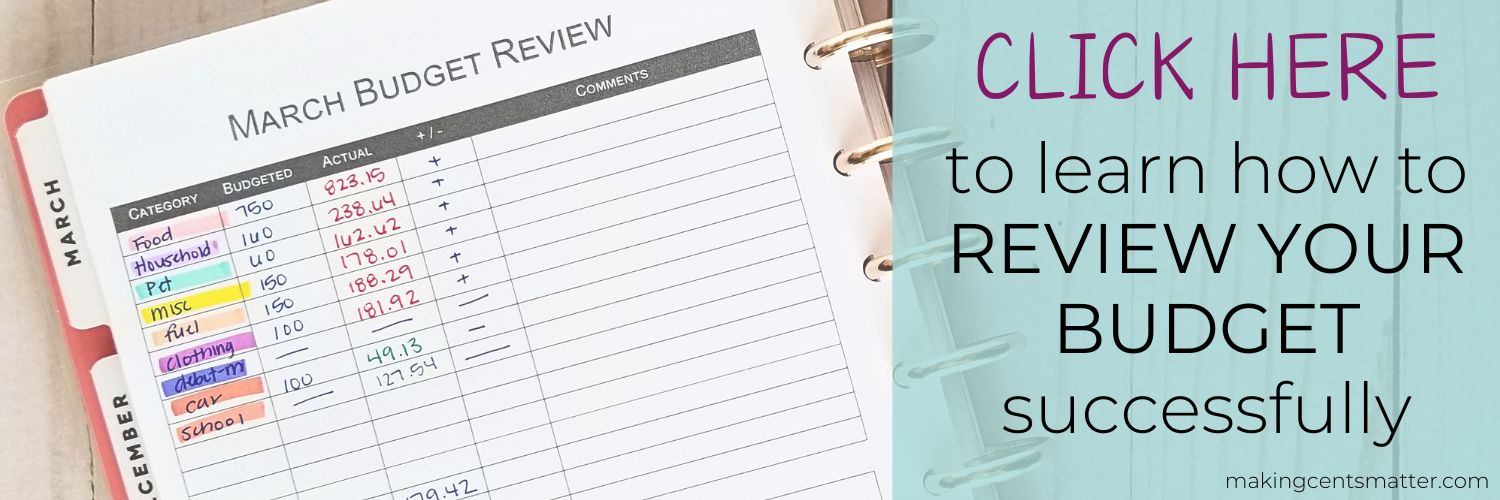
3. Reviewing Your Budget Monthly
Budgets are not a “set it and forget it” system. Your budget needs to be revisited as your lifestyle, income, and needs change over time. By reviewing your budget monthly, you can adjust your budget categories, celebrate progress you have made towards your goals, and use the insight to improve areas where you overspent.
Your budget review is a realistic look at your spending, reduces overwhelm, and helps create a flexible foundation that allows you to feel in control on your financial journey.
4. Meal Planning
Anyone with kids knows that groceries and take-out can be the biggest budget-drainer out there. Meal planning in advance helps to reduce those last-minute take-out decisions, minimize unplanned grocery store runs, and also helps to decrease the amount of wasted food (and money) that you go through!
Meal planning around your schedule also helps support your financial goals by freeing up money towards your savings goals, or even debt repayments. The more intentional you are with planning your meals, the easier it becomes over time to stick to your grocery budget without sacrificing quality or even convenience.
5. Using Cash For Discretionary Spending
Every time I swipe my debit card, it gets really easy for me to lose track of my spending. This is especially true when there are small, frequent purchases. When I switch to cash, it makes it much easier for me to see how much money I have left for purchases that aren’t necessarily needed at that time.
This is because having the physical cash in front of me creates a barrier that encourages me to spend mindfully, rather than just tapping my debit card mindlessly.
Whether you use a physical cash budget or a combination of cash and digital, make sure that you keep track of your discretionary spending before it gets out of control. This simple shift in awareness of your spending limits helps you create measurable progress towards your goals.
Want help starting a cash budget? Check Out: [This Ultimate Guide To Using A Cash Budget].

Want More Content Like This? Check Out:
- How To Set SMART Goals For Your Finances
- How To Create A Positive Relationship With Money
- Freshen Your Finances With A Budget Reset
Final Thoughts: Your Next Step To Healthy Financial Habits
As with anything in your life, your financial health is built on the routines you practice every day. You have the power to strengthen them, whether you are just starting out with budgeting and saving money or refining how you manage your money. The steps that you take today to improve your habits, no matter how small they may seem, have the potential to create major results in the future.
I want you to revisit your financial goals to identify one bad habit that you will make an effort to stop, and one good habit that you will start consistently.


Leave a Reply