Money can feel very overwhelming when bills, account balances, various paperwork & plans for your future all compete for your attention. Simply opening your banking app can feel difficult when you are unsure what your balance will read, or even where to begin. When you don’t know how to organize your finances, you are creating a reliable place to track your income, bills, spending, savings, debts, and important documents.
Having this information together helps bring all the pieces together and easily see the next step. The best part is that you don’t need the perfect budget, or even an entire weekend before you get started. A system that has a few simple and manageable tasks can start to help you build a much calmer relationship with your finances, without the need to fix it all at once.
In This Post:
- What Do Organized Finances Look Like?
- How Organizing Your Finances Reduces Overwhelm
- Where To Start When Your Finances Are Overwhelming
- 14 Manageable Steps To Get Your Finances Organized
- Keeping The System Simple & Sustainable
- Common Mistakes While Organizing Your Finances
- When Should You Reset Your Financial Organization System
- Take One Small Step Towards An Organized Financial Life
What Do Organized Finances Look Like?
There is no one-size-fits-all method to financial organization. What works for you may not work for me. At the same time, what worked for me three years ago doesn’t work for me now, but may work for you. It is okay for your organizational methods to change because the purpose remains the same.
At the very core of financial organization is:
- Understanding how much money you have coming in
- Knowing which payments are due, and how much
- Keeping your account information & documents secure & accessible
- Regularly tracking your spending, savings, and debt
- Consistently reviewing your finances
Paper, Digital, or a Combination
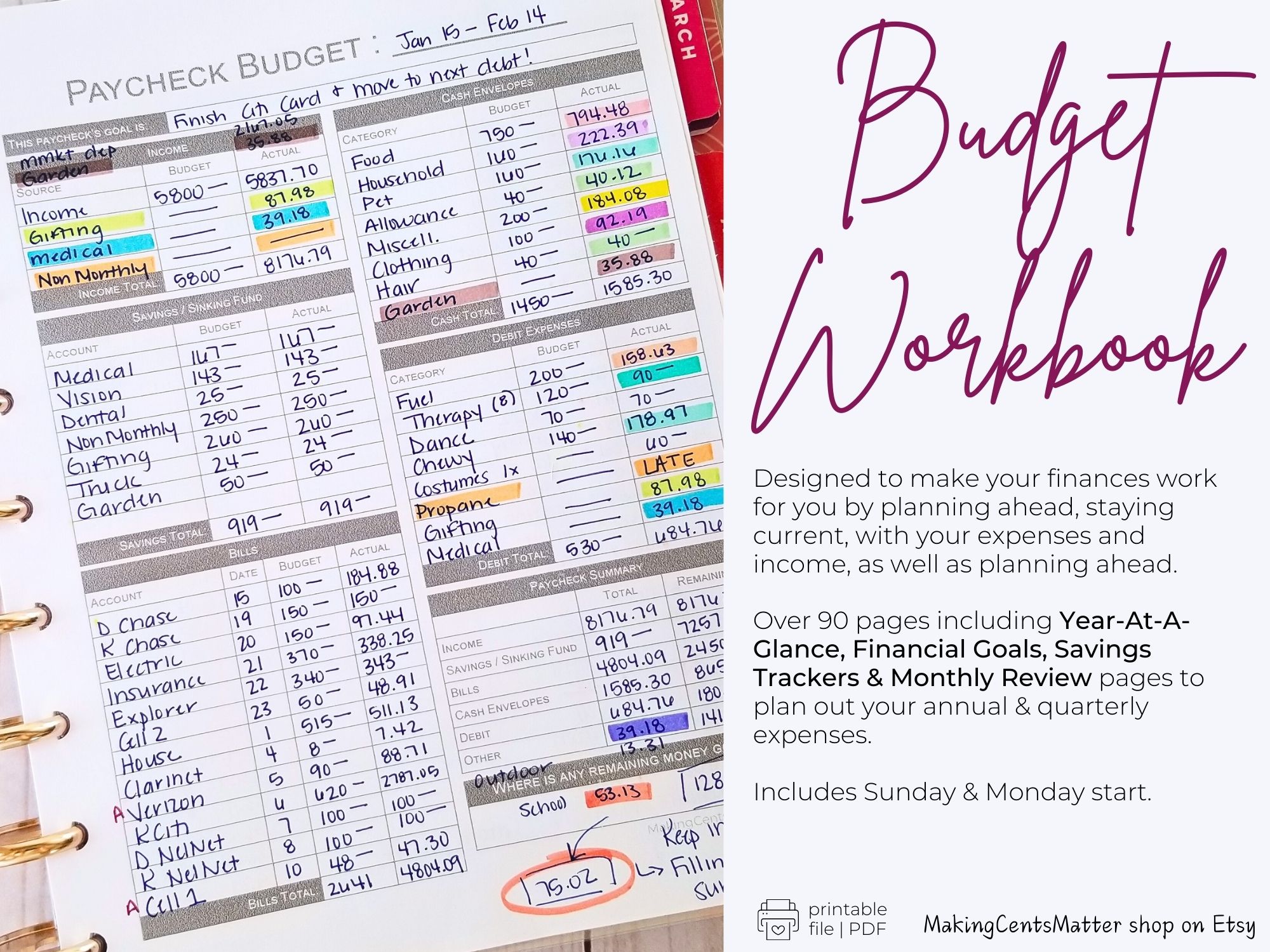
Since there is no single correct way to organize your money, your version of organizing your finances may look like choosing a budget binder to keep your bills in and important payment days on a calendar. For someone else, it might be using cash for spending categories, and tracking that spending with a spreadsheet. Or maybe it means utilizing your bank’s bill pay features monthly to track what bills were last paid and what is upcoming.
Each of those examples could work for the same person, or for a variety of people, simply depending on what is going on in their life.
Because budgeting is very individual, the system that is most useful to you is the one that you can maintain, not make look identical to other systems out there.
A useful system should help you answer the following questions immediately:
- How much money do I currently have available?
- What needs to be paid before my next payday?
- What’s my next manageable action?
- Where can I find important information related to my finances?
Organized Finances Help Your Budget
Financial organization is all about gathering the information; budgeting uses that information and our priorities to plan your spending. The beauty is that your priorities in the moment also shape what organization means to you.
Need help creating your first budget? Check out this [Beginner’s Guide To Budgeting]
How Organizing Your Finances Reduces Overwhelm
Financial stress often includes uncertainty. You may worry about a forgotten payment, be unsure if your account balance will cover a purchase, or have a large expense you are not prepared for. Having your financial information in one place can reduce some of that uncertainty.
While organizing alone cannot create more income or get rid of any expenses that are unaffordable, the benefit here is clarity around your current method and identifying where changes are needed. If your numbers show a shortfall, that is useful information about your situation, not a judgment about your effort.
Fewer Details To Remember
When all of your financial information is scattered across emails, envelopes, and apps, and you are relying on mental reminders alone, every day decisions on spending take a lot more effort. It becomes so easy to forget the exact due date of that upcoming bill. With one place for everything, you have a reference point for starting.
Prioritize What Needs Attention First
The ideal organizational method helps you keep track of your priorities in your financial management.
- If forgotten bills are causing the most stress, then bill due date reminders may be your first focus.
- If you regularly run short of money before the next payday, then a clearer view of payment timings would help.
- When paperwork is what is most overwhelming, creating a reliable place to store documents will bring immediate relief.
- Becoming debt-free is your long-term goal; creating & following your debt-payoff plan will help reduce your stress.

Plan For Expenses Before They Arrive
Organization can make a large concern feel much more manageable. Instead of trying to fix everything at once, you can identify one action, such as setting aside money for a known expense. Planning and paying for irregular expenses becomes simple by utilizing sinking funds.
Clear Starting Point For Financial Decisions
When your finances are organized, there is a practical foundation in place for improving your overall financial health. You can easily spot problems while there is still time to respond. Whether it’s an unfamiliar charge, a subscription you no longer use, or a shortfall before payday, creating financial organization helps give you the confidence to continue on, no matter how challenging the circumstances may be.
Curious how your emotions can relate to budgeting? Read [How Your Emotions Are Affecting Your Spending Decisions]

Where To Start When Your Finances Are Overwhelming?
You don’t have to be behind on bills or feel overwhelmed by your finances to start. Organization helps improve your overall financial health no matter what stage of life you’re in.
However, if you are starting to manage your personal finances entirely, organization provides a useful starting point to scaffold from. Before you decide on a budgeting method that works for you, you can simply learn where your money comes from and where it goes.
Choose the problem that is causing you the most Discomfort
If you’re bothered by misplaced bills, unsure about upcoming payment amounts, or if the thought of not knowing how much you have in your account is what bothers you the most, start there!
Begin With A 15-minute Financial Reset
Beginning doesn’t have to be a monumental task that takes you all day. You can start really simple with these three steps:
- Gather your current bills and account information
- List your payment accounts & amounts that are due before your next payday
- Choose one place to keep that list that you will see regularly
Becoming financially healthy involves building supportive routines while responding realistically to the resources and challenges in your life. If you have more time to complete a longer reset, you can follow these steps for a financial reset.
14 Manageable Steps To Get Your Finances Organized
Before you get started, I want you to remember that organizing your finances takes time. There is no need to go through this entire list today. Choose one or two tasks you can easily complete now that would make next week a little easier. Small steps to build on are what create bigger changes.
1: Set A Small Time Limit
Choose one clear task to complete in this time period, such as gathering your bills or reviewing your checking account.
This short session helps give you a clear stopping point that you can make progress on, without turning it into an exhausting project.
2: Create A Simple Financial Snapshot
Collect your current bank statements, bills, income information, and any documents you believe to be relevant. Don’t stress about finding it all; begin with what you can find.
List out your available account balances for your checking, savings, credit card, loan, and retirement accounts. Remember to include the date when the information was checked, the institution name & what the purpose of each account is.
The goal here is to know where your money and financial obligations are. This describes your financial snapshot, or your starting point, and can help to decide where your attention goes next.

3: Create one place for your paperwork
Whether you choose a folder, binder, or a secure digital location, keep the initial setup simple. Broad categories like “bills”, “accounts”, “taxes”, and “insurance” are more than enough to get started.
Avoid spending the entire session designing a filing system before you know what information you’ll need to store.
4: Create A Budget Calendar
Just going with a monthly total hides when you have stretches that may have more money going out than coming in.
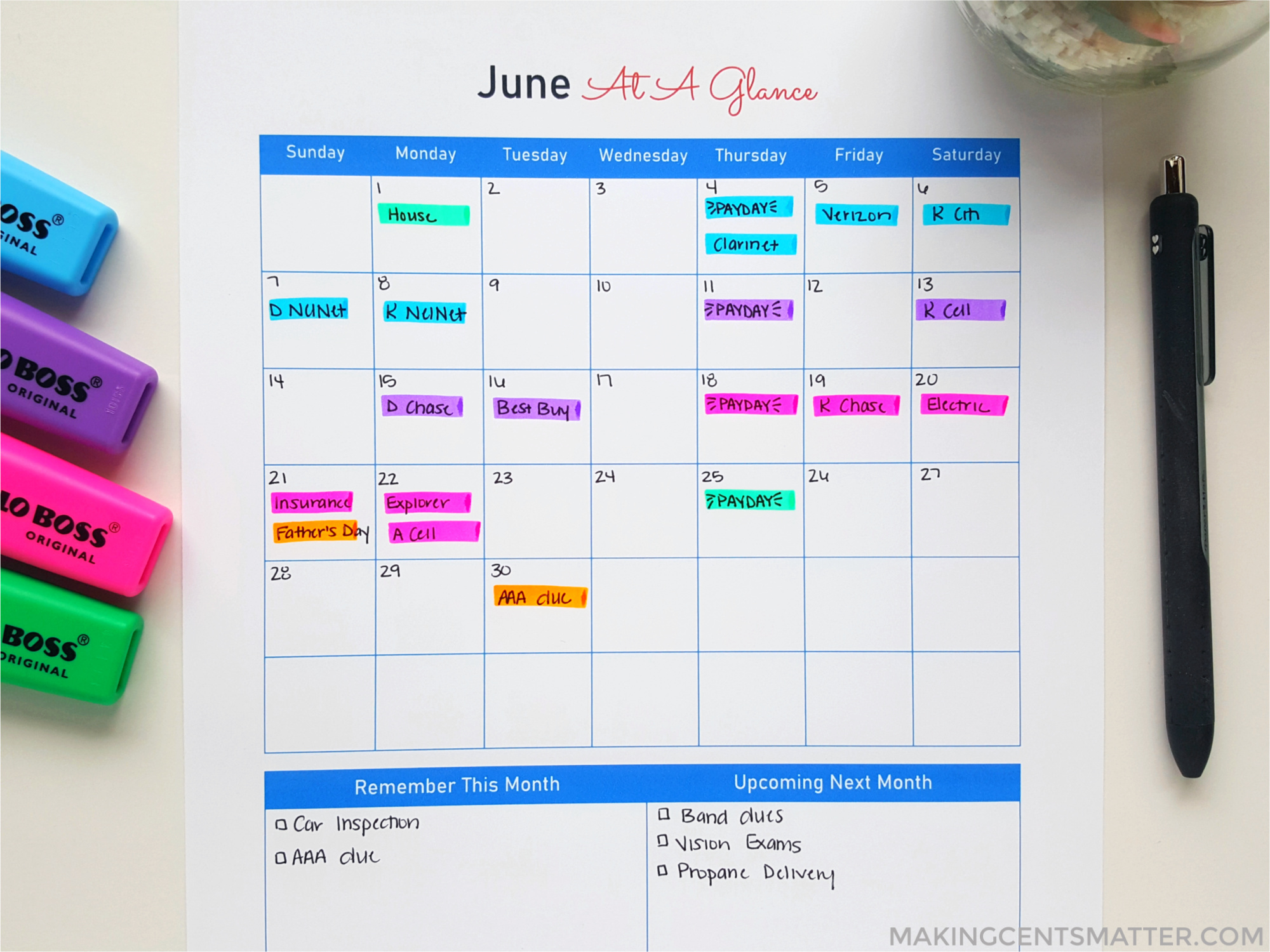
For the upcoming month, list out each bill, the due date, and its expected amount on a calendar. List out your paydays to help see how your income and payments line up. This helps you see the difference between what is actually coming in and out, and shows you where you may need to adjust spending.
You can also read more tips on how to effectively use a budget calendar to organize your finances here.
5: Have One Complete Bill Payment List
List out each bill, the due date, and the expected amount. This bill-pay checklist should include your regular monthly payments, as well as irregular payments that happen annually or quarterly. You need to see the full picture of your spending, not just day-to-day or month-to-month.
Creating this checklist helps you see what your total obligation is to your bills all year.
6: Review Your Spending Over A Period of Time
If going through an entire month of receipts, transactions, and other expenses feels too daunting, start with a shorter period, like the last week.
This is the time to notice patterns in your spending without judgement, and group them into common categories. The purpose is to see where your money is currently going; this will help make any spending plans you create much more realistic.

7: Include Recurring Charges
Go through your bank statements and see if there are subscriptions, memberships, or other miscellaneous payments you’ve had over the past year. Note when they’re due on your Bill Pay Checklist and make a plan to start saving now to cover the cost when it’s due. You could even choose a few you want to cancel.
If you decide these expenses are worth keeping, even the smallest, recurring expenses need a place in your budget.
8: Create Basic Categories For Your Spending
Now that you tracked your actual spending and observed some patterns, group that spending into categories that reflect your household. These are going to be your budget categories.
Be sure to include the following in your categories:
- Essential Expenses: rent/mortgage, utilities, insurance
- Flexible Expenses: groceries, fuel, personal care, pet care, EZPass
- Debt Payments: credit cards, student loans, car payments
- Savings Contributions: emergency fund, sinking funds
Once you know what you spend throughout the course of the month, you can subtract it from what you expect as income. If there is more money going out than coming in, this is where you can identify what categories should be adjusted, or more income is needed.
While a budget is simply an estimate, the vital piece is to base your budget off your actual costs. A grocery budget or an electric bill may look good on paper, but it will not help if you are consistently falling short of what your household needs.

9: Plan For Irregular Expenses
This is the time to go through your planner or calendar app, and think back to the expenses that happen seasonally, or even occasionally. Examples include:
- holiday spending
- vehicle inspection & registration
- sports fees
- school activity expenses
- pool cleaning & chemical expenses
- vacation/travel expenses
You can estimate how much you’ll need for it, or you can look back at what you spent over the last year. Start saving what you can without stretching your budget too thin, and adjust as needed. This helps prepare you for a known expense while giving the budget at that future time to have more wiggle room.
10: List Out Your Debts In One Place
Have a clear view of what debt you owe by keeping a record of balances, minimum payments, due dates, as well as interest rates. This will help you choose what repayment plan you want to take.
To learn more about what methods to use to pay off debt, check out [Which Debt Payoff Method Is Best For You]
11: Give Your Paperwork A Home
Having one place that you can reference when you sit down to pay your bills, update your budget, review your spending, and manage your finances helps to keep you on track.
Keeping everything in one place also helps you keep things together, gives structure to your finances, and helps you stay on track with your financial goals.
There is no right or wrong answer here. Be sure to choose something that works for you, is easily accessible, and makes sense to you!

12: Set Up Helpful Reminders
This can be as simple as app reminders for upcoming due dates, balance alerts when your account reaches a certain amount, or putting upcoming renewals in your planner. These reminders become part of your budgeting routine.
If you have bills set up for automatic payments, make sure to check that the money is still available in your account when they process the payment, not when it is due. Automating your finances works best when it is paired with your awareness.
13: Choose One Financial Goal
Set a goal that matters to your current financial situation. It doesn’t have to be large; it could be as simple as building a small cash cushion, getting current on an overdue bill, or saving up a little for an upcoming purchase.
Whatever your goal is, write down the next action and a date you will review your progress. Your financial goals become much more achievable when they are connected to something specific that you can do.
Need some ideas for what goal to choose next? Check out these [20 Genius Goals For Saving Money]
14: Schedule Your Next Money Check-In
Before you state that you’re done and walk away, schedule your next check-in.
Use the time to review your balances & upcoming bills, go through recent transactions and spending, and determine one task that requires your attention.
By creating time to focus on your finances, you’re turning simple tasks into healthy money habits while improving your financial health.
Keep This System Simple & Sustainable
I have found over the years that the most effective tips for managing my finances are the ones that make it really easy to do on an ordinary day. When my budget categories are manageable, my binder is accessible, and my spending reviews are kept short, I have the motivation to return to my budget again and again.
But when I miss a check-in, life starts to get hectic, and I don’t want to have to break down and rebuild my system time and time again. Through divorce, selling & buying homes, as well as home renovations & medical emergencies, when my system is kept simple, my finances are not part of my stress.
As you start to implement your system, notice what is working. Some signs that you are making progress include whether you were able to find a document quickly, remembered to make that payment on time, or simply set aside some money for an expense.
Financial health isn’t just about what money you have available to you; it also includes having simple routines that support your decisions. The most useful system for organizing your finances should help you answer a few basic questions quickly, and without any struggles:
- How much money do I have available for spending?
- What needs to be paid before the next payday arrives?
- Where can I find pertinent financial information?
- What is my next manageable action?
Keep One Place To Find All Your Information
Having one place to reference all of your information helps, especially if you have a mix of digital and physical documents. One reference point helps reduce time and energy spent in finding what is needed.
Build A Minimum Routine For Difficult Weeks
Having a budget routine is essential to staying on track. But during times when life gets tough, having a slimmed-down and minimal routine that is easy to follow, or even to restart from, will keep you on track without having to play catch-up later.
Some things to keep in your minimal routine can include:
- fewer spending categories to track
- reviewing how much money you have available
- what payments are upcoming
- any urgent tasks
Complete A Monthly Review
While weekly check-ins are helpful to stay motivated and review your expenses, a monthly review is a little more in-depth.
Monthly budget reviews look at what you have budgeted within each category over the month, what was actually spent, and why. It also looks at what expenses are coming up, and how you can prepare for them now.
Without an overall review of your budget each month, you won’t have a way to recognize the patterns that are occurring. These patterns are crucial to help you recognize when you need to adjust a budget that isn’t working.
You don’t need to be perfect with managing your system; you simply need to be consistent.

Common Mistakes Made While Organizing Your Finances
Here are some common mistakes that can make organizing your finances harder than it needs to be:
- Trying to organize everything at once. Going through and attempting to organize everything all at once, even with the best intentions, is actually a recipe for disaster. Before you complete the task, you’ve run out of energy, or had to move on to something else entirely. Now you’re feeling ashamed that you still haven’t gotten it organized yet.
INSTEAD: Concentrate on one task at a time, like gathering all your bill statements into one location. - Creating more budget categories or trackers than you’ll use. Getting into the weeds in how much you are spending and where can be a slippery slope when you start tracking your expenses. The purpose isn’t to categorize each and every penny spent, or track where every dollar went; it is to get a bird’s-eye view of where your money is going.
INSTEAD: Utilize fewer budget categories, and keep a “miscellaneous” category for a catch-all of expenses that aren’t consistent month to month. - Relying on your memory for when payments are due. Our memories aren’t built for storing every piece of information that it receives throughout the day. Some bits come in, and others go out. You could have the best intentions to pay that bill on time, and three days later completely forget that the due date came and went.
INSTEAD: Keep reminders in your planner or calendar app, and have a set time to sit down and go through what due dates are coming up. - Recording & tracking without reviewing. Your budget is not static; it is going to change as your life and needs change. Simply recording what comes in and tracking what goes out is keeping your budget static, and is useless if you don’t review & adjust your spending from time to time.
INSTEAD: Schedule some time to review your spending, and ask some questions about what’s expected and unexpected about it. - Simply stopping entirely after you’ve missed some time. In the moment, the simplest thing to do is ignore your finances entirely, but this leads to being unaware of what is actually happening. Are you behind on bills? Did autopayments not go through? Did you overdraft your account?
INSTEAD: Schedule time consistently to go over your finances, even if it’s the bare minimum. Having an awareness of what is in and out is better than ignoring it entirely.
Unsure if you’re on the right track with your budget? Check out these [10 Budgeting Mistakes You Need to Avoid]

When Should You Reset Your Financial Organization System
The best time is an uninterrupted period of time when you can give one task your full attention. You don’t need it to be the beginning of the year, the first of the month, or even your birthday, or the day you get the new job and earn more.
If there is a bill that is urgent, or something that needs your immediate attention, start there. The rest of your organization can happen naturally as you remain consistent.
Some other natural opportunities to start or reset your system can include:
- A change in income or employment
- Changing household responsibilities & expenses
- Repeated missed payments or misplaced information
- Planning payments between irregular incomes
- Adjusting to a move, separation, or retirement
- A system that is more effort than you can realistically maintain
- An expensive season of life
- Paying down debt, or rebuilding savings
- Generally anxious or uncertain when thinking about money
Resetting how you are organizing your finances helps you to restore your system. If you want a broader view of your financial picture, reviewing your finances with a personal finance audit is going to benefit you more.
Take One Small Step Towards Financial Organization
Organizing your finances is an ongoing process that you build over time and will change with you over the years. When you keep each step manageable, you have clarity on your finances as well as understand where you are within your goals.
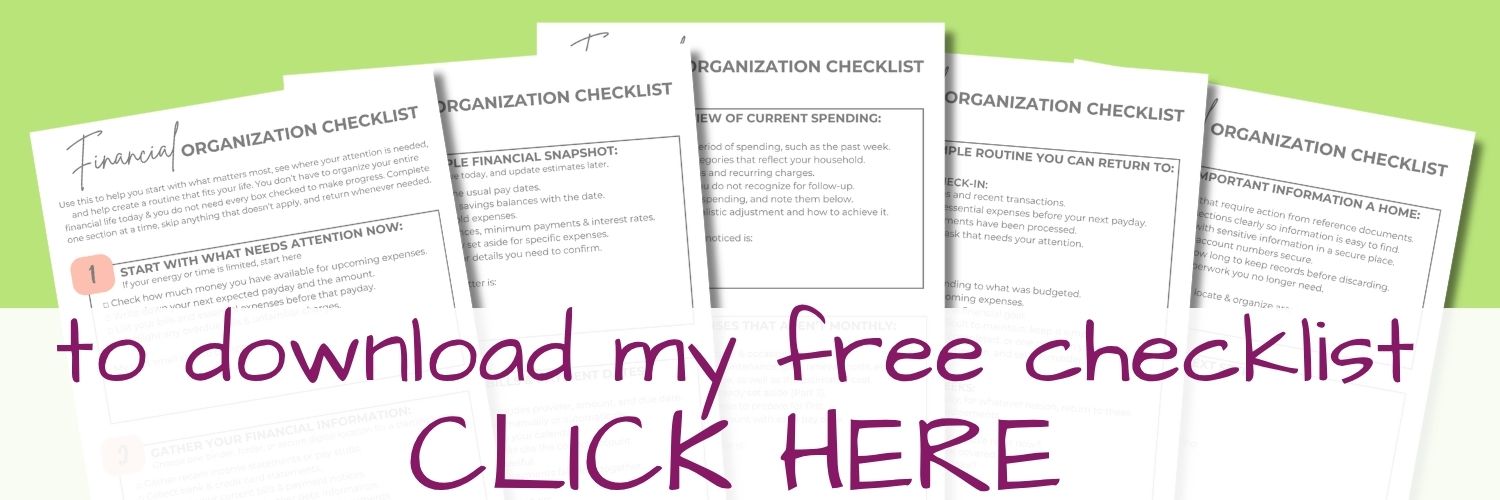
To get started today, you can download my FREE 5-page Financial Organization Checklist in my Resource Library and pick one task that can be completed today!

Leave a Reply